 Vineeth K Kolarath
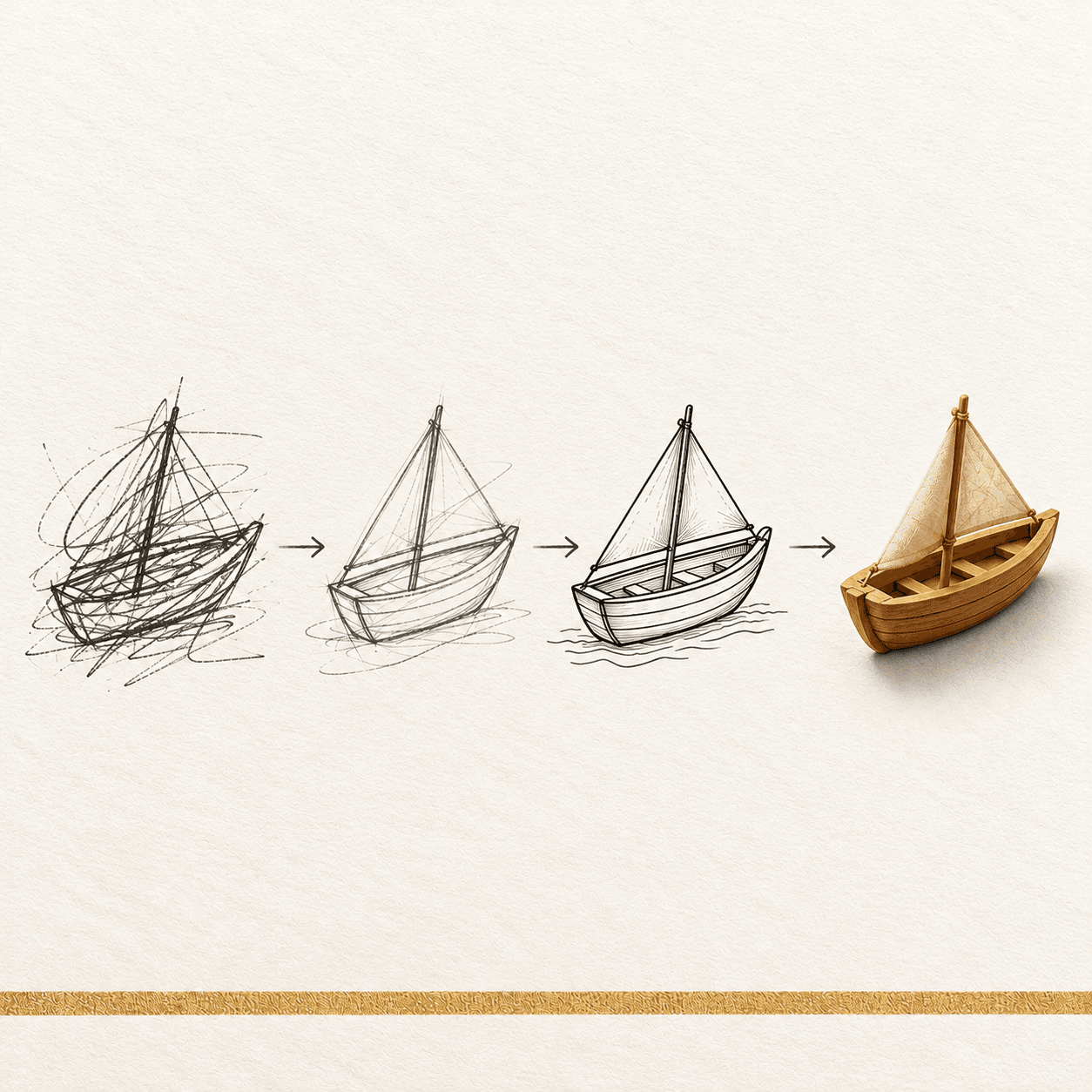
Every meaningful project starts somewhere. Often, it begins with a simple thought, a quick sketch, or a few lines written on a phone.
People sometimes hesitate to share these early ideas. They say, “It’s only a rough idea.”
That is exactly where I like to start.
A rough idea gives us room to think. We can question it, explore different possibilities, and change direction without losing too much time or effort. There is no need to defend it or make it perfect. We just need to understand what it could become.
First, we understand the problem.
Who faces it? How often does it occur? How do people deal with it today? These questions help us separate a genuine problem from an interesting idea. Sometimes, the original idea changes completely. Sometimes, we realise it is not worth pursuing. That is part of the process, and it is better to learn this early.
Next, we build a prototype.
A prototype is simply an early version of an idea that demonstrates how it might work. It does not need a finished design, a polished appearance, or a brand name.
For example, a soil moisture sensor connected to a simple circuit that lights up when the soil becomes dry is already a working prototype. It turns an idea into something real that we can observe, test, and improve.
Then, we test it, learn from it, and try again.
Things will go wrong. A connection may be loose. The code may produce an unexpected result. A device may work in the lab but fail when someone actually uses it.
Each problem gives us useful information. We identify what went wrong, make a change, and test again. This is how we move from an idea that sounds good to a solution that works in practice.
Finally, we learn to explain what we have built.
Can you describe the problem, your solution, and how it works to someone with no technical background? If not, there may still be something to understand or improve.
Explaining an idea clearly is not just about communication. It helps us recognise what we truly understand and what we still need to learn.
That is the approach I follow: understand the problem, build something small, test it, learn from the results, and explain it clearly.
You do not need an expensive laboratory, advanced equipment, or a large budget to get started. You need a place to work, a few basic tools, the willingness to experiment, and the curiosity to ask, “What happens if we try this?”
That is also why this website exists.
I mentor students, makers, and first-time founders across Kerala and India, helping them turn ideas into working projects. Through this website, I will share what I teach, what I build, the lessons I learn, and the mistakes I make along the way.
Some articles will explore robotics, electronics, and intelligent machines. Others will focus on the people, thinking, and practical decisions behind the work. The aim is simple: to share useful knowledge in a way that is clear, practical, and easy to apply.
You do not need to have everything figured out before you begin. You only need an idea worth exploring and the willingness to take the first step.
Bring a rough idea. We will work on it together, one step at a time.